Showing posts with label Facebook. Show all posts

Illustration Pages features Jeff Fisher LogoMotives

The illustrative identity design work of Jeff Fisher LogoMotives is featured on the new blog Illustration Pages. The site highlights the Facebook pages of visual artists from all around the globe.

Other creative Facebook pages recently featured on the blog include those for Sugar Frosted Goodness, Kenny Scharf, Michael Doret and Bella Pilar. The Facebook pages of illustration-related organizations, events and causes are also posted on occasion.

Designer Jeff Fisher was invited to participate on Illustration Pages as a result of the Jeff Fisher LogoMotives Facebook fan page. Illustrators, graphic designers, painters, muralists, sculptors, film makers, animators and all visual artists are invited to submit their Facebook page links to submission@illustrationpages.com for consideration. More information may be found on the Illustration Pages Facebook fan page

© 2010 Jeff Fisher LogoMotives

Self-Promotion the Social Way

Designer Daniel McNutt recently posted on Twitter, “Jeff, you were social networking before it had its catchy name.”

And I realized that he’s right: I’ve been using social interaction tools for self-promotion for quite a long time. I found my way online more than a decade ago with my first website, newsgroups and forums such as the HOW Forum (forum.howdesign.com). I used those outlets to promote my firm and to share my design and business expertise. About five years later, I was dragged kicking and screaming into the then-new blogosphere. To my surprise, bLog-oMotives (my first attempt at blogging) proved to be a great outlet for communicating ideas and promoting my work. I created a separate blog to promote my book Identity Crisis! From there, I made over my fairly stagnant business website with a blogfolio format (as you’d guess, part blog and part portfolio of my work), which was more flexible for me and more search engine-friendly.

Social networking is the latest tool for online marketing, one that I’ve embraced, like many other creative pros. LinkedIn, Facebook, MySpace, Flickr, Naymz, Plaxo, Twitter, Squidoo and Ning — it almost sounds like the name of a law firm. Instead, by adding “.com” to each term, you’ll find just a few of the growing number of social networking sources available to spread your name, work and brand out into cyberspace.

And that’s precisely the point of using social networks as self-promotion tools: They can grow your universe of business prospects, draw traffic back to your website or blog and help you develop a broad reputation as an expert. “These sites all help get your name out there,” says Paul Kline, a photographer who runs a studio bearing his name in Washington, DC. “Websites, search engines and direct mail are all important, but social networking sites are more personal, and in some cases more effective.”

Getting Started in Social Media
Social networking success depends on initiating interaction, engaging an audience, sharing information, making the impersonal personal and inviting feedback. It also demands that you offer easy access to an already established web presence (either your website or blog). Your online audience will want additional information about you and your expertise before deciding to be your friend, follower or contact. Without that link, you lose credibility, and the perceived value of your tweets, posts and comments may lessen.

Nashville, TN-based children’s illustrator Holli Conger built that foundation first. “I’ve always had an online portfolio and website,” she says. “When I first started out, I participated on a lot of forums. I would usually read more than I commented or posted. Then I moved on to blogging, which opened me up to other illustrators who were more on my level career-wise.” Justin Ahrens, principal of Geneva, IL-based design firm Rule29, had a similar introductory experience to internet marketing. “Early on, we primarily utilized our website; it basically just showcased our work, contact information and news highlights.”

MySpace and Facebook
When I joined MySpace several years ago, the network was primarily populated by teens, but I saw its promotional promise and I did land a couple of projects. But I’ve found myself returning to MySpace less and less frequently as my business goals have outgrown the site’s audience and abilities. Frankly, it’s OK to move on if a social network isn’t serving your needs.

When I joined Facebook, my strategy was to create a personal profile with a business slant. Increasingly, though, Facebook is attracting “grown-up” users and has added new tools that enable a more professional presence on the network. I’ve set my Facebook profile up so that it automatically feeds my latest blog posts, and I contribute targeted, business-specific updates and post galleries of appropriate photos and graphic images. And I’ve created a page for Jeff Fisher LogoMotives that exclusively spotlights my business.

LinkedIn
LinkedIn was built from the ground up as a business networking tool; unfortunately, the site’s early iteration was clunky, difficult to navigate and, let’s face it, boring. Now, however, LinkedIn has perhaps taken cues from Facebook: It’s a friendlier environment for making professional contacts, with easier navigation. The addition of industry-specific groups and discussions created a venue of true social interaction. The groups also make it easier to find and connect with people of similar interests and experience.

Looking at who your contacts are connected to expands your exposure to potential clients, as Conger discovered. “LinkedIn led to a pretty lucrative design/illustration contract that feeds me work monthly,” she says. “I found the company through another contact and noticed in their profile that they were hiring in-house positions. I e-mailed to see if they’d be interested in working with me on a freelance basis. They said yes and they’ve been one of the best clients I’ve ever had.”

Twitter
My fear of a Twitter addiction kept me from participating early on; after just a month of tweeting, traffic to my blogfolio and blogs doubled. I’ve found Twitter to be an invaluable business resource. While casual Twitter users post their whereabouts and what they ate for breakfast, I opt for more professional tweets. I add links to blog posts or articles I think others may find interesting. I share design competition and book submission deadlines. I retweet, or re-post, messages I feel may be of interest to those following my posts. Occasionally I toss in a personal note or response to someone.

Using Social Media Strategically
In my involvement with these sites, I see a lot of designers, writers, illustrators and photographers networking only with other creative types. Selectively interacting with just your peers isn’t the best tactic for finding potential clients. So I encourage creative professionals to also seek out networking opportunities on sites frequented by business folks, like StartupNation.com or Biznik.com.

The social networking sites of traditional print media also provide great opportunities to rub cyber elbows with business professionals. Magazine websites such as FastCompany.com, Entrepreneur.com and Good Magazine provide a connection to the business community—including the ability to create online profiles, participate in discussions and post articles or blogs. Being active in these online conversations demonstrates your expertise to a new niche.

I’ve discovered that there’s little difference between my individual personality and that of my business. Conger advocates using caution in establishing the online attitude for your business, as well. “I think it’s important to show your personality, but I’ve chosen to have a more professional appearance on the internet as a whole,” she says. “Everything is searchable, and what you say could come back to haunt you.”

This blending of personal and professional worlds may be one hurdle keeping you from tapping social media as a professional tool. Another may be time. Just as you can be strategic about representing your brand online, you can be thoughtful about how you manage all these networks. You can repurpose content across media; a blog post might also appear in your newsletter and, in short form, on Twitter. Applications like Ping.fm can synchronize your blog with your social media accounts, so a new post is automatically broadcast to other outlets—a huge time-saver. And tools like TweetDeck let you monitor and post to Twitter and Facebook simultaneously.

When it comes to social networking, it’s possible to successfully mix business with pleasure. “Make time for social networking,” Ahrens concludes. “It’s a ton of fun—and more important, you never know whether or not a valuable new business connection is just around the corner.”

Note: This article, by Jeff Fisher - the Engineer of Creative Identity for the Portland-based design firm Jeff Fisher LogoMotives, was originally published in its entirety in the October 2009 HOW Magazine Self-Promotion issue. "8 tips and tricks for professional and effective 'Self-Promotion the Social Way'" is the side-bar to that printed piece.

© 2009 Jeff Fisher LogoMotives and HOW Magazine

Swirling around the home and garden

When making presentations - or sending one of my marketing packets - to potential clients, I often end up having conversations about the swirl paper clips I've used to fasten a few pages together. Rather than discussing my design work, the immediate topic may be my Clipiola Italian paper clips from Cavallini Papers & Co.

Twitter and Facebook mentions of this phenomenon led to a renewed realization of how much swirl imagery plays a role in our lives. For some time I had been documenting the swirls around our home and garden. I've shared the images in a Flickr gallery.

© 2009 Jeff Fisher LogoMotives

Become a Jeff Fisher LogoMotives fan on Facebook

Not long ago I wrote blog entries on marketing one's design (or writing) efforts by way of social media/networking sites and online portfolios. Since then I've expanded my Facebook presence with a Page devoted to Jeff Fisher LogoMotives. Now my "peeps," friends, peers, clients and stalkers ("Jeff Fisher! Jeff Fisher!") can become official fans by way of the Jeff Fisher LogoMotives Page.

The page features photo galleries of my work, notifications of upcoming speaking engagements, a feed of posts from the Jeff Fisher LogoMotives blogfolio and more. I hope you'll stop by and take a look at yet another marketing and promotion vehicle.

© 2008 Jeff Fisher LogoMotives

Marketing through social networks and social media

The other night I was a member of a panel discussing "Harnessing the Power of Online Social Networks," hosted by Self-Employed Creative Professionals (SECP) in Portland. Others on the panel discussing the business advantages of social networking included writer Susan Rich of RichWriting Creative Services, Working Artists LLC founderAdrienne Fritze, and eMarketing Strategist Elgé Premeau. Christian Messer, of Whiplash Design, was the moderator for the evening.

I was asked to approach the subject of using online social sites from my perspective as the author of Identity Crisis!: 50 Redesigns That Transformed Stale Identities Into Successful Brands. Panel members wanted me to showcase how I had used social networking and related media to market and promote my book. In doing so, I prepared a handout for attendees with the following examples:

MySpace - MySpace drives more traffic to my web presence and blogs than any other social networking site I've used. It allows a detailed profile, image storage, blogs - which I use to post my blog headlines with links back to my own blog sites - forums and actual social networking. MySpace is much more than simply social networking for teenagers. I have eliminated most interaction not directly related to my book and my work with the posted statement: The primary purpose of this MySpace page is to discuss and promote various aspects of graphic design.

FaceBook: Facebook is probably my favorite social networking site. For me it's actually fun, in addition to providing a great opportunity for posting a detailed profile - with links back to whatever sites you wish to post, networking, image galleries, article posting capabilities, blog auto-feeds, and much more. Again, it's very effective in driving web traffic my way. A design industry editor once asked, "Isn't Facebook just for college kids?. My response was: "Have you visited Facebook lately?" It's amazing who in the design industry is making use of the resource as a marketing and promotion tool.

LinkedIn: LinkedIn comes across as primarily a technical information resource for job seekers and those seeking specialized employees. The specialized questions and answers, along with the recent addition of "groups." does make it a bit more interactive. I wish the navigation wasn't so "clunky." Still, making use of the detailed profile has been a great self-promotion tool. The more information provided the more successful LinkedIn will be for the user.

biznik: biznik - Business networking that doesn't suck - is one of the most user-friendly social networking/media sites. It's easy to connect with other members and to create an actual dialog with them. The detailed profile, ability to post articles and other aspects make it a value resource for the independent business person. Local "real world" networking events are an added benefit. As in many of the examples, there are additional benefits with paid memberships.

naymz: I'm relatively new to this site. Months ago I was invited by someone I know and I did little to complete the profile until a discussion with my fellow panel members. Less than one hour of work and a great deal of traffic was coming my way - primarily due to the blogs feeds to my personal profile.

Flickr: Referring to this resource as social networking may not be the first thing that comes to a individual's mind when visiting the site. The storage and sharing of images is it's main attribute. However, the creation of personal communities, groups and the image feeds to other social sites all become part of the online networking experience.

JumpUp: This site, from the Intuit folks, is an example of another aspect of social networking - the corporate-sponsored networking resource. JumpUp creates an avenue for a detailed business profile, interacting with other business professionals, creating a blog and more. My participation online also resulted in my work and book being featured in a traveling exhibit for the company. An online radio program is in the works.

StartupNation: I've been a participant on this site for some time. My primary reason for joining was that a designer shouldn't be networking only with other designers - one needs to be interacting with business people who may become potential clients. StartupNation provides an opportunity to mingle with business people through forum participation, forum postings, a detailed profile, blogs, articles and podcasts.

Adholes: This online networking resource is primarily for the advertising professional. It's a great vehicle for networking through forum participation, posting blogs and articles, and scheduling local meetups through groups. Besides, I like the name of the group, and their tagline: "Ad industry schmoozing without the expensive restaurant tabs."

Fast Pitch: I initially made use of this site for the press release distribution capabilities. Fast Pitch now includes greater networking opportunities, blog feeds and more.

Fast Company: This is the social networking and social media presence of my favorite business magazine, Fast Company. You can network, join groups, post articles and more.

GOOD Magazine: I'm fairly new to GOOD. It's another publication that allows its readers and members to socially interact. My profile, with pertinent information posted, has drawn traffic to mt site and blogs.

Zoodango: This site recently went through a major update. I haven't yet checked out all of the features.

Ziki: The site allows you to network with others, post links, and revieve auto-feeds from blogs and Flickr. The blog feeds are especially effective in bring me a great deal of traffic.

Small Business Online Community: This offering, from Bank of America, is somewhat new and evolving. A forum allows for customer interaction, articles are posted by experts and more is offered on a regular basis.

This is far from a complete list of the sources available for social networking and social media. As mentioned earlier, these are just the resources I put into play in marketing and promoting my book, Identity Crisis!. As you can see, from each page example, I have taken the opportunity to establish a somewhat consistent look in the content and imagery used in each profile. The photo of me is the same in many, my logo is an identifying mark for most, the same book cover image is featured, mentions of the book are always included, and website, or blog, addresses are used with consistency.

Still, it the examples presented should give many people ideas of where they might look for added marketing opportunities.

For a look at portfolio sites check out my earlier piece Marketing logo design efforts with online resources.

© 2008 Jeff fisher LogoMotives

Marketing logo design services with online resources

At speaking engagements, while participating in online forums, and via email I am always being asked for suggestions on how to market identity design services online. I've covered a variety of methods I use in a previous bLog-oMotives entry. In this post I am specifically addressing online resources I have used to give exposure to my own logo design efforts. Each of the Internet portfolio, or gallery, options has resulted in potential logo design clients coming my way.

Logopond: My favorite web presence for showcasing, and viewing, logo design work is Logopond. Access to the site is free, as is participation. Participant contributions and advertising support the site. Design professionals and students can establish a profile, create a portfolio of work, comment on the work of others, participate in a site forum and more. Those seeking logo designers are free to peruse the site for potential designers. In addition, the first Logopond Awards competition is currently being conducted. A "sister" site has recently been launched to feature the work of illustrators.

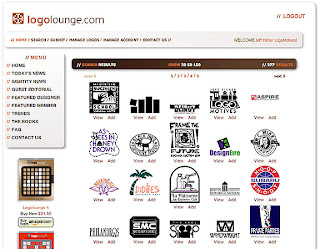
LogoLounge: Many in the design industry are probably familiar with LogoLounge due to the four books being marketed under the same name (Volumes 1- 4). This membership-based site allows identity designers the opportunity to upload a portfolio of images that, for the $100 annual fee, are then also considered for upcoming volumes in the book series. Some identity-related content is available to anyone visiting the site. However, membership does have its privileges. The site is currently taking submissions, through June 30, 2008, that will be considered for LogoLounge, Volume 5.

The Identity Archives Project: The IADP is an interesting project that has the potential to be a great resource with additional participation from the design community. It is another free logo-specific resource that provides an searchable archive of identity designs uploaded by designers. I have only posted a few images myself. However, a client did find me through the site last year.

designerID: Social networking comes to the design community with the designerID site. Design professionals may create an online portfolio, post a detailed online profile, submit news, and connect with others in the industry on this advertising-supported website. The resource is not identity design specific.

design:related: This site is another making use of a social networking model. With registration, designers may create a profile, publish a portfolio of work, connect with other creative types, indicate inspirations, post news and more.

Facebook: My Facebook profile and photo galleries have been an excellent method of showcasing my identity design work. The exposure has even been greater since participating in Facebook groups related to logo design. An international community of identity designers has been established.

flickr: The flickr site isn't just for photo images. The creation of a set of my logo design images brought my work to the attention of numerous potential clients.

Graphics.com: Portfolios have been in place, in a wide variety of categories, for quite some time on Graphics.com. My logo design portfolio has been a valuable marketing resource for several years now.

DesignHide: My DesignHide profile is the newest addition to my online marketing. The site, still in beta, defines itself as the "place for creative media producers, including web designers, graphic artists, videographers, print media producers, photographers, artists, and ad managers, to display their work with the end goal of attracting new business opportunities. We want to put the best creative professionals in touch with those seeking the best."

Coroflot: Coroflot is really the only more traditional online portfolio site on which I have identity design work posted. The website offers a job board and industry-related blog in addition to portfolios.

There are many other online resources for posting and promoting one's design work. As mentioned earlier in this piece, those listed above are just the online options I am currently using to give my own identity design work an international presence beyond my website, blogs, and books and magazines in which my work may appear.

© 2008 Jeff Fisher LogoMotives.